Health and Safety Policy for Landscaping Greenwich
 Health and safety is a core part of every successful landscaping project. In landscaping Greenwich, safe working practices protect workers, visitors, clients, and the public while helping projects run smoothly. This policy sets out clear expectations for planning, carrying out, and reviewing landscaping activities so that risks are identified early and controlled effectively.
Our approach is based on prevention, communication, and accountability. Every task, from planting and pruning to paving and soil movement, must be assessed for potential hazards. A well-managed landscaping service in Greenwich should balance productivity with safe systems of work, proper supervision, and consistent use of suitable equipment.
 Environmental conditions, site layout, and the type of work being completed all influence risk levels. Because of this, landscaping teams must remain alert to changing conditions such as uneven ground, wet surfaces, sharp tools, moving machinery, and weather-related hazards. Safety is not an additional step; it is part of the work itself.
Responsibilities and Standards
All employees, contractors, and supervisors involved in landscaping Greenwich projects are expected to follow this policy at all times. Managers must ensure that work is properly planned, resources are suitable, and people have the skills to carry out their duties safely. Workers must use equipment correctly, follow instructions, and report hazards or incidents without delay.
Risk assessments must be completed before work begins and reviewed whenever conditions change. These assessments should consider manual handling, slips and trips, cutting tools, machinery use, vehicle movements, dust, noise, and contact with vegetation or chemicals. Where necessary, additional controls such as barriers, warning signs, or restricted access areas should be put in place.
The landscaping team should also maintain a clean and organised work area. Tools must be stored securely, waste removed promptly, and pathways kept as clear as possible. Good housekeeping reduces avoidable accidents and helps create a safer working environment for everyone on site.
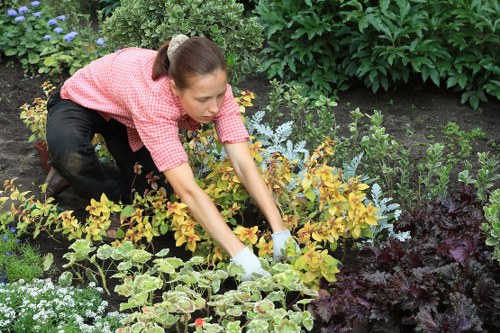 Personal protective equipment should be selected according to the task being performed. This may include gloves, safety boots, eye protection, hearing protection, high-visibility clothing, and weather-appropriate clothing. PPE must fit correctly, be worn consistently, and be checked regularly for damage or wear.
Training is an essential part of any landscaping safety policy. Workers must be trained to recognise hazards, operate equipment safely, handle materials correctly, and respond appropriately to emergencies. Refresher training should be provided when new methods, tools, or substances are introduced into the workplace.
Particular care is needed when using machinery such as strimmers, hedge cutters, mowers, compactors, and powered saws. These tools must be inspected before use and maintained in good working order. Only trained and authorised personnel should operate them. Guards, switches, and emergency stop functions must remain in place and fully operational.
Working Practices and Hazard Control
Manual handling is a common risk in landscaping, especially when moving soil, plants, paving materials, or waste. Where possible, mechanical aids should be used. If lifting is unavoidable, workers should be trained in safe lifting techniques and encouraged to work in teams when loads are awkward or heavy.
Weather can also affect safety significantly. Heat, cold, rain, ice, and strong winds may create additional risks and should be considered in daily planning. Breaks, hydration, suitable clothing, and possible changes to the work schedule may be needed to maintain safe conditions throughout the day.
In landscaping Greenwich, the use of chemicals such as fertilisers, herbicides, or fuel products must be controlled carefully. Labels and safety instructions should be followed, substances stored securely, and spill procedures clearly understood. Exposure should be minimised through correct handling, appropriate storage, and good ventilation where relevant.
Public safety is equally important. Landscaping work often takes place in shared or visible environments, so pedestrians, cyclists, and nearby occupants must be protected from site hazards. Safe access routes, barriers, and clear signage should be used where needed to prevent unauthorised entry or accidental contact with equipment.
Emergency preparedness forms a key part of this policy. First aid supplies should be available, emergency procedures should be known to all workers, and incidents must be recorded and reviewed. Any injury, near miss, or unsafe condition should be treated seriously so that improvements can be made quickly.
Regular inspections and maintenance help keep standards high. Equipment, vehicles, and storage areas should be checked routinely, with faults reported and corrected before work continues. A proactive maintenance plan supports reliability, reduces downtime, and lowers the likelihood of preventable incidents.
Review and Continuous Improvement
 Every landscaping project should be reviewed at appropriate intervals to ensure this policy remains effective. Lessons learned from incidents, near misses, and site observations should be used to improve procedures. By continually refining safe working practices, landscaping services in Greenwich can maintain high standards and protect everyone involved.
Health and safety is a shared responsibility that depends on planning, discipline, and a strong safety culture. When everyone understands their role and applies the correct controls, landscaping work can be carried out efficiently while keeping risks at an acceptable level.
 In summary, this policy supports safe, professional, and responsible landscaping by setting clear expectations for risk management, equipment use, training, PPE, public protection, and emergency readiness. A consistent commitment to safety helps deliver quality results while reducing harm and disruption.